
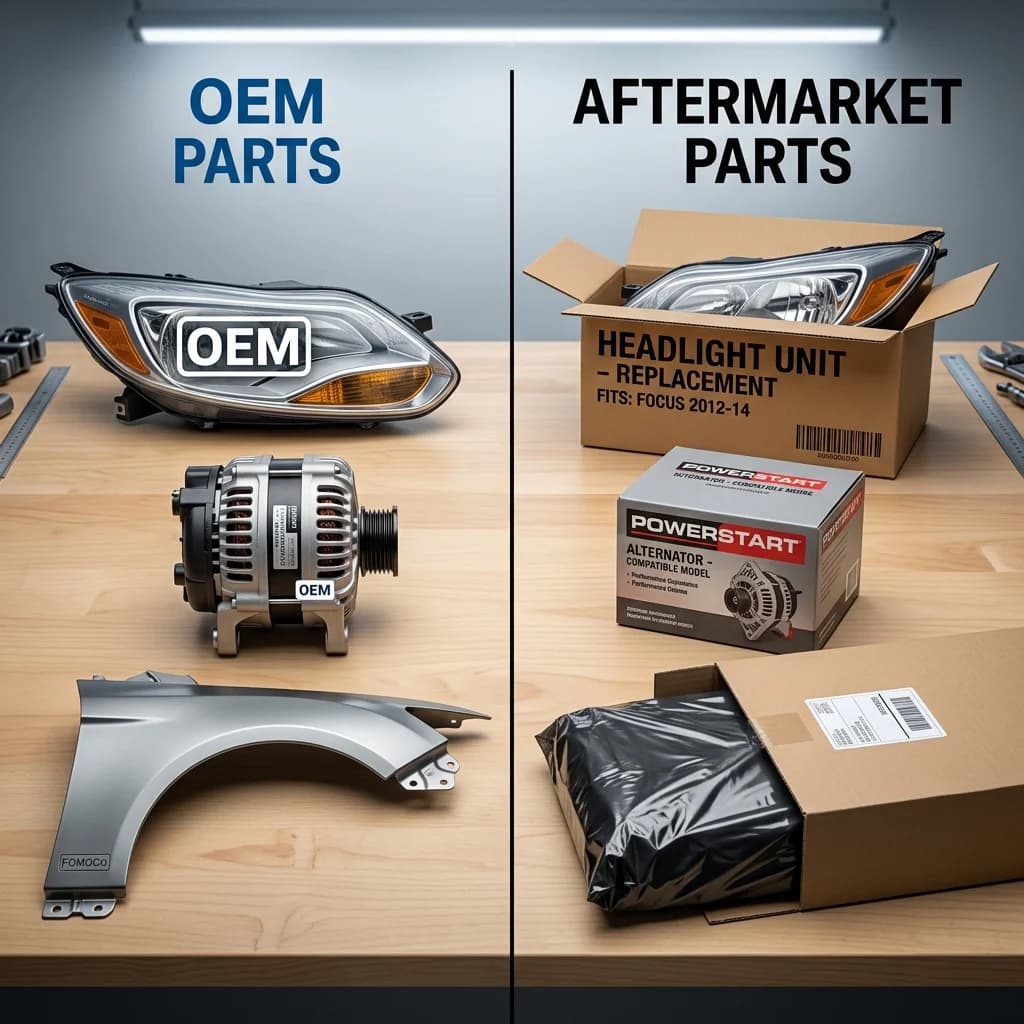
Key Takeaways
- Aftermarket parts cost 30-60% less than new OEM but quality varies wildly
- Used OEM from salvage yards costs 50-85% less than new OEM with factory quality
- For safety parts (brakes, steering): OEM or premium aftermarket only
- For body panels and electrical modules: used OEM is almost always the best value
Price Comparison: OEM vs Aftermarket vs Salvage OEM
| Part | New OEM (Dealer) | New Aftermarket | Used OEM (Salvage) | Savings vs Dealer |
|---|---|---|---|---|
| Headlight assembly | $400-$800 | $80-$200 | $75-$200 | 75-85% |
| Front fender | $300-$600 | $80-$150 | $50-$125 | 80-90% |
| Alternator | $350-$600 | $120-$250 | $60-$150 | 75-85% |
| Starter motor | $250-$500 | $80-$180 | $40-$100 | 80-85% |
| Door mirror (power) | $200-$500 | $40-$120 | $30-$80 | 85-90% |
| Radiator | $300-$600 | $100-$200 | $50-$125 | 80-85% |
| Control arm | $200-$400 | $60-$150 | $40-$100 | 75-85% |
| AC compressor | $400-$800 | $150-$350 | $80-$200 | 75-80% |
| ECU/PCM module | $500-$1,500 | Not available | $100-$300 | 80-85% |
| Catalytic converter | $1,500-$3,000 | $200-$600 | $150-$400 | 85-90% |
When to Choose Each Option
Choose New OEM When:
- The vehicle is under manufacturer warranty (using non-OEM may void coverage)
- It's a lease return and the dealer requires OEM repairs
- The part is a precision component with tight tolerances (variable valve timing actuators, hybrid inverters)
Choose Aftermarket When:
- It's a maintenance item that wears out regularly (brake pads, filters, belts, spark plugs)
- You're buying from a premium brand (Moog, Denso, Bosch, Timken, AC Delco)
- The OEM part has a known design flaw and the aftermarket version has been improved
Choose Used OEM (Salvage Yard) When:
- You need body panels — used OEM has factory paint and fit that aftermarket can't match
- Electronic modules (ECU, BCM, instrument cluster) — aftermarket doesn't exist for these
- Engines and transmissions — used OEM is the only affordable option besides rebuild
- Interior parts (seats, door panels, trim) — aftermarket rarely makes these
- You want factory quality at 50-85% savings
Parts Where Aftermarket Falls Short
Some parts just don't have good aftermarket options:
| Part | Why Aftermarket is Risky | Better Option |
|---|---|---|
| Body panels | Poor fit, misaligned gaps, thin metal | Used OEM from salvage yard |
| Headlights (LED/projector) | Poor beam pattern, moisture intrusion, fast failure | Used OEM |
| Catalytic converters | May not meet CARB standards, shorter life | Used OEM (already CARB-compliant) |
| Window regulators | Cheap motors, plastic gears that strip | Used OEM or Dorman (good AM brand) |
| Electronic modules | No aftermarket exists | Used OEM only option |
For specific cost comparisons by vehicle, read our Repair Cost vs Junkyard guide. Ready to find parts? Search salvage yard inventory for OEM parts near you.