
Key Takeaways
- Salvage title = insurance company totaled the car. It can't be driven until repaired and re-inspected
- Insurance buyback lets you keep your totaled car for the difference between payout and salvage value
- Salvage cars sell at auction for 30-50% below market value — significant savings if damage is repairable
- Most banks won't finance salvage titles. Rebuilt titles have limited financing options
How Insurance Totaling Works
Insurance companies total a vehicle when the cost to repair it exceeds a percentage of the car's actual cash value (ACV). This threshold varies by state:
| Threshold | States |
|---|---|
| 50% | Iowa |
| 60% | New Mexico |
| 70% | Arizona, Ohio, Oklahoma |
| 75% | Alabama, Florida, Georgia, Indiana, Kansas, Louisiana, Michigan, Missouri, New Jersey, North Carolina, Oregon, South Carolina, Tennessee, Texas, Utah, Virginia, Wyoming |
| 80% | California, Connecticut, Illinois, Maryland, Massachusetts, Minnesota, Nevada, New York, Pennsylvania, Washington, Wisconsin |
| 100% (TLF formula) | Colorado, Delaware, Hawaii, Idaho, Kentucky, Maine, Mississippi, Montana, Nebraska, New Hampshire, North Dakota, Rhode Island, South Dakota, Vermont, West Virginia |
States using the "Total Loss Formula" (TLF) total a vehicle when: repair cost + salvage value > actual cash value. This means a car might not be totaled even if repairs are 90% of its value, as long as the salvage value is low enough.
The Insurance Buyback Process
When your insurance totals your car, you have two options:
- Accept the payout — Insurance pays you the ACV, takes the car, and sells it at salvage auction
- Buy it back — Insurance deducts the salvage value from your payout, and you keep the car with a salvage title
Buyback example:
- Car ACV: $20,000
- Repair estimate: $16,000
- Salvage value: $5,000
- Your payout if you surrender: $20,000
- Your payout if you buy back: $20,000 - $5,000 = $15,000 (and you keep the car)
This makes sense if you can repair the car for less than $5,000. Shops that specialize in insurance work and salvage yards are usually cheaper than the insurance company's estimate.
Buying Salvage Cars at Auction
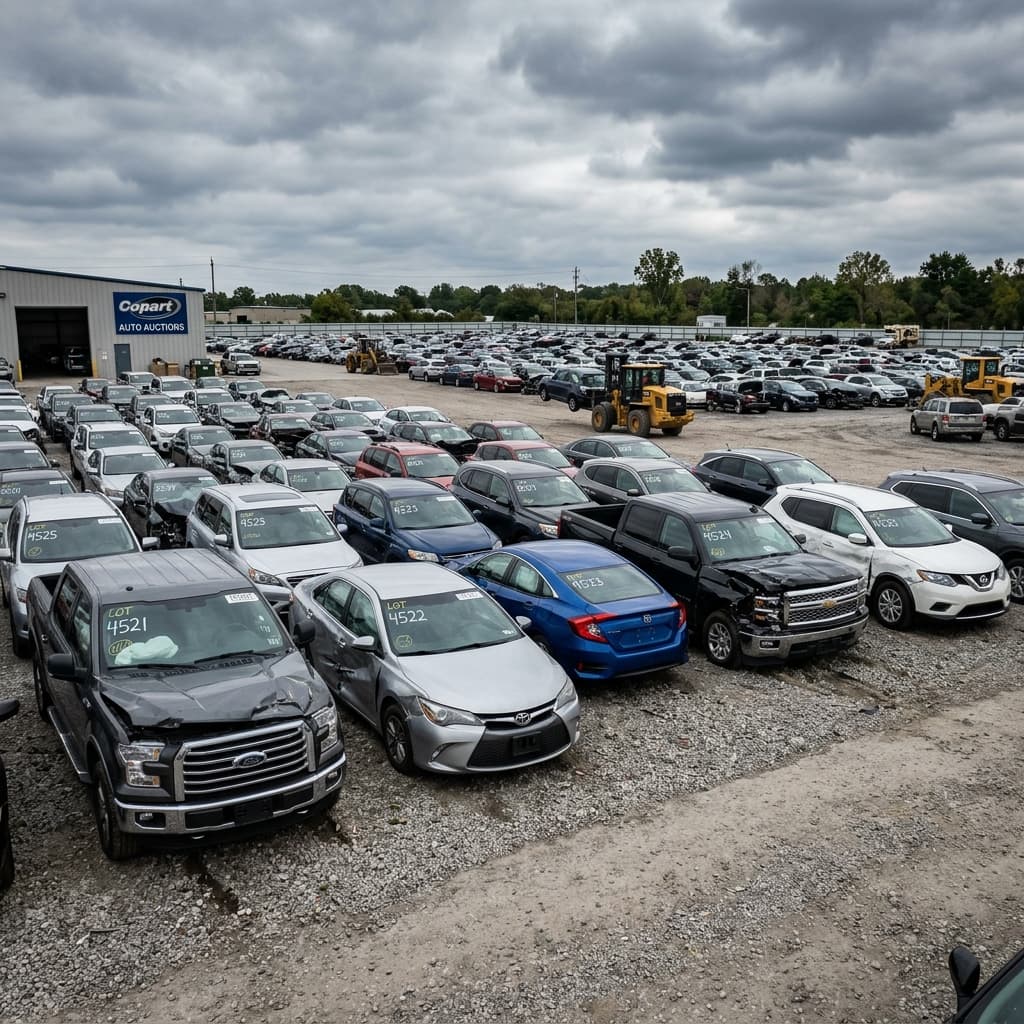
The two major salvage auction platforms are Copart and IAA (Insurance Auto Auctions). Both require registration and some states require a dealer license to buy.
| Platform | Public Buying? | Buyer Fee | Inventory |
|---|---|---|---|
| Copart | Yes (with Premier membership $99/yr) | $150-$1,000+ depending on sale price | 250,000+ vehicles |
| IAA | Yes (free registration) | $150-$800+ depending on sale price | 200,000+ vehicles |
Typical auction prices for salvage vehicles run 20-50% of clean retail value. A 2020 Toyota Camry worth $22,000 clean might sell for $8,000-$12,000 at salvage auction depending on damage severity.
Is It Worth Buying a Salvage Car?
It depends entirely on the damage type:
| Damage Type | Risk Level | Worth Buying? |
|---|---|---|
| Cosmetic only (hail, minor dents) | Low | Yes — often the best deals |
| Theft recovery (no damage) | Low | Yes — check for missing parts |
| Single-panel collision | Low-Medium | Usually — check for frame involvement |
| Multi-panel collision | Medium | Maybe — get frame measurement |
| Airbag deployment | Medium-High | Expensive to fix ($2,000-$5,000 for airbags alone) |
| Frame damage | High | Usually no — alignment issues long-term |
| Flood damage | Very High | No — electrical problems surface months later |
For the differences between salvage and rebuilt titles, read our salvage vs rebuilt title comparison. To find parts for your repair project, search our salvage yard inventory.