
Key Takeaways
- Shop: $500-$1,200. With an under-seat access panel: $350-$700
- The part is $150-$500. The rest is dropping the tank
- Never buy used. It runs continuously and sits behind hours of labor
- Test pressure at the rail first. Relays, fuses, and strainers imitate a dead pump
Why the labor is what it is
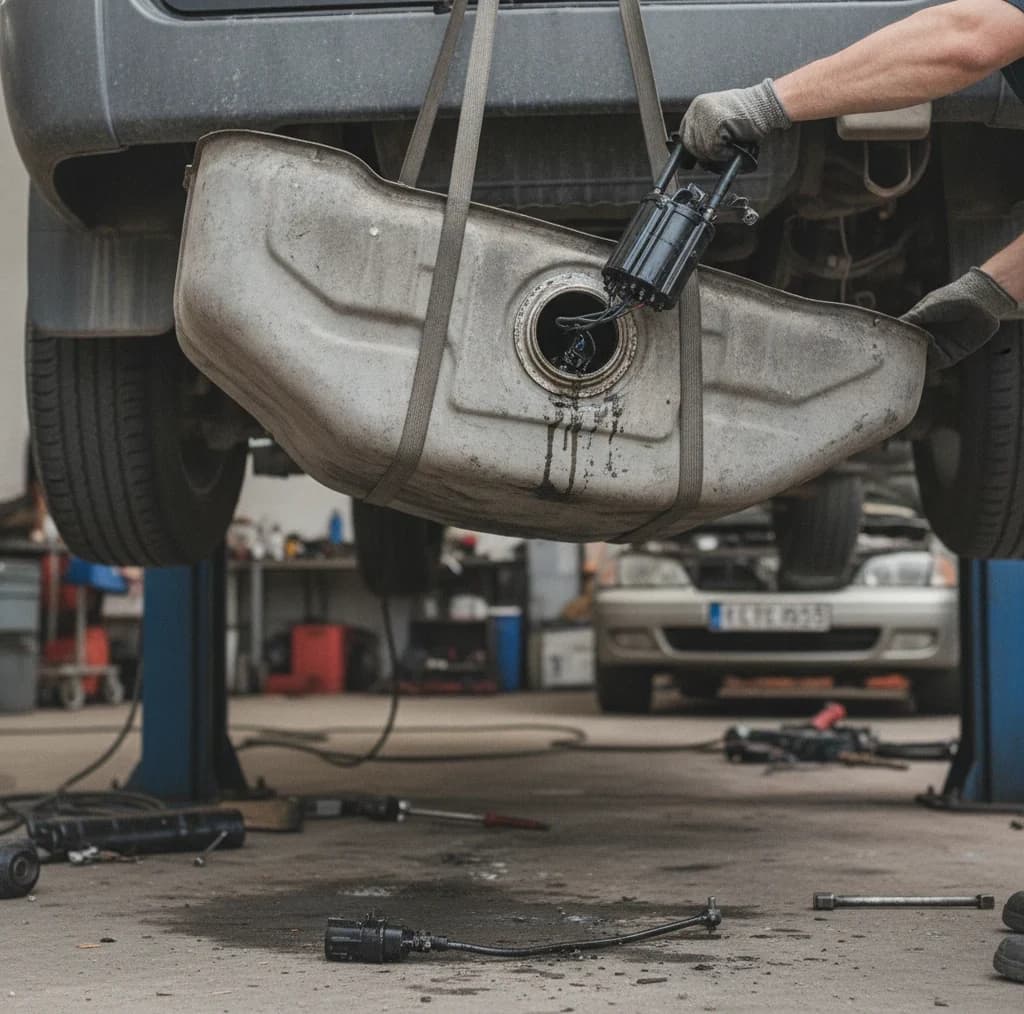
On most vehicles the pump lives inside the fuel tank, cooled and lubricated by the fuel around it. Reaching it means supporting the tank, disconnecting filler neck, vent lines, fuel lines and wiring, then lowering it far enough to reach the lock ring on top.
The complication is that the tank should be near empty first, and it rarely is when the pump fails. Draining 15 gallons safely takes time and somewhere to put it, and shops charge for both.
| Access | Labor | Part | Total |
|---|---|---|---|
| Access panel under rear seat or cargo floor | 1-2 hr | $150-$450 | $350-$700 |
| Tank must be lowered | 2-4 hr | $150-$500 | $500-$1,200 |
| Tank lowered, saddle tank or dual pump | 3-6 hr | $300-$800 | $800-$1,800 |
| DIY with access panel | Your labor | $150-$450 | $150-$450 |
Check whether your vehicle has an access panel before accepting a quote. Plenty do, and the difference is several hundred dollars.
Test before you commit
Dropping a tank to find the pump was fine is a bad day. Three checks in order.
- Listen for the prime. Key to run, engine not cranking, with the radio off. You should hear a two-second whir from the rear. Nothing at all points at the relay, fuse, inertia switch, or wiring rather than the pump.
- Check the relay and fuse. Swapping the fuel pump relay with an identical one elsewhere in the box is a free test that solves this surprisingly often.
- Measure pressure at the rail. A gauge is $30-$60. Compare against spec at idle, then have someone hold it at higher rpm or drive it with the gauge visible. Pressure that is fine at idle and collapses under load is the classic failing pump.
If pressure is low, the cause is not automatically the pump. A clogged fuel filter or the sock strainer on the pump inlet produces the same reading, and both are far cheaper. On vehicles with a serviceable inline filter, replace it before anything else.
A failing fuel pressure regulator does the opposite, holding pressure too high, and a leaking one pulls fuel through the vacuum line, which you can check by pulling that line and looking for wetness.
Why used is a poor idea here
Every part of the argument points one way. The pump runs constantly whenever the engine is on, so wear accumulates with the donor's entire service life. It is submerged in fuel, and fuel that sat in a yard car for months turns to varnish that coats the impeller and commutator. And it sits behind two to four hours of labor.
A new quality pump is $150-$500. A used one is $30-$60. That $200 saving is a bet that costs $700 when it loses, on a part with no way to inspect its remaining life.
What is worth pulling at a yard: the tank straps, the lock ring, the sending unit float arm if yours is the fault, filler neck hoses, and the access panel cover if a previous owner cut yours out. Those do not wear.
Module or pump alone
Modern vehicles use a fuel pump module: pump, strainer, level sender, pressure regulator and reservoir in one assembly. You can often buy just the pump element for less and transfer it into your existing housing.
Whether to do that depends on the housing. If the plastic is brittle, the sender is erratic, or the reservoir check valve is leaking down overnight and causing long crank times, the complete module is the better buy. If the housing is sound, the pump element alone saves $100-$200.
One caution: transferring the element means getting the strainer and the fuel line retainers right, and those small plastic clips break with age. Have replacements before you start.
Doing the job safely
- Run the tank low before the day if you can. It is lighter, safer, and less to store.
- Relieve fuel pressure at the rail before opening any line.
- Disconnect the battery and work outside, away from anything with a pilot light.
- Replace the tank seal. The large O-ring under the lock ring hardens and will leak vapour if reused. It usually comes with the module.
- Clean around the opening before lifting the module out, so debris does not fall in.
- Prime before cranking. Cycle the key to run several times to build pressure rather than cranking a dry rail.