
Key Takeaways
- Nearly all LS heads bolt to nearly all LS blocks. What changes is compression and flow
- Cathedral port and rectangular port heads need matching intakes
- Gen III uses a 24x reluctor and rear cam sensor, Gen IV 58x and front sensor. Mixing needs the matching controller
- The 5.3 LM7 is the cheapest entry point and shares architecture with the whole family
Why this family is different
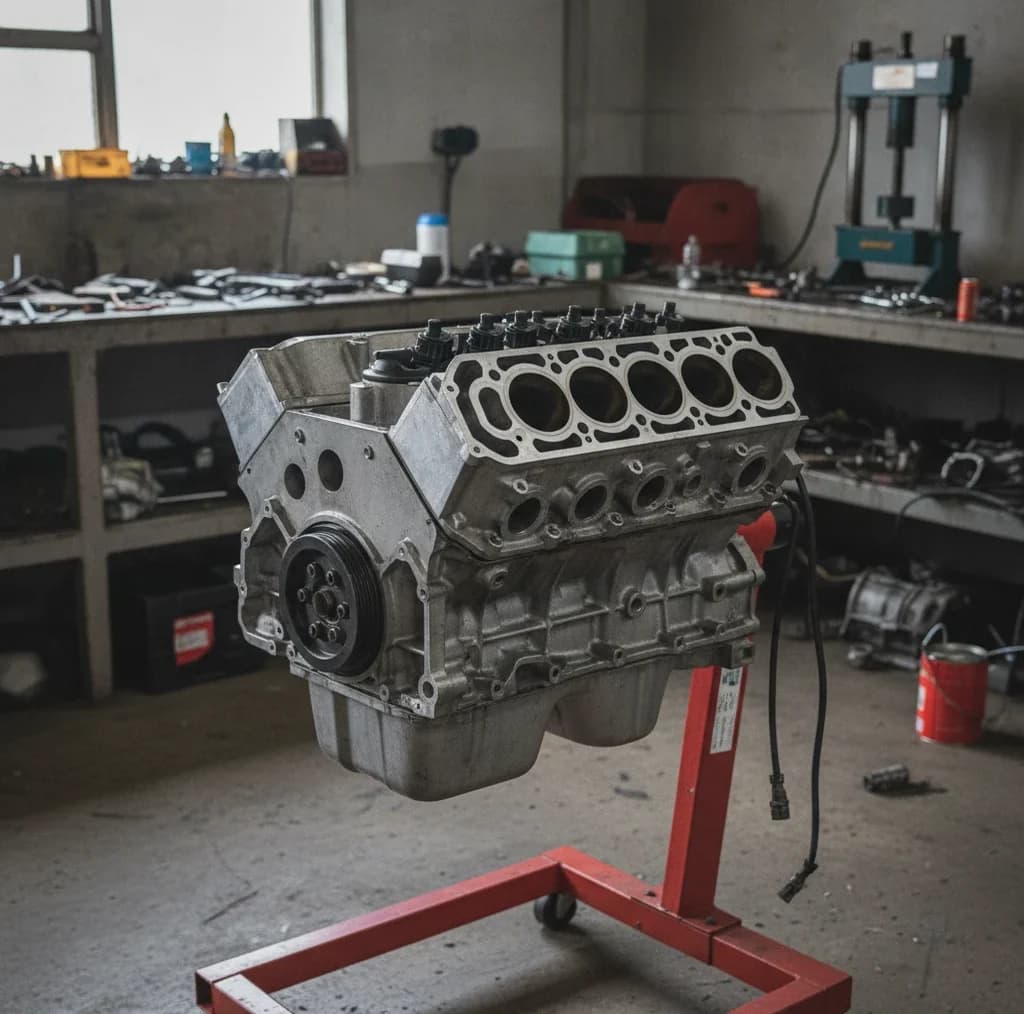
GM built the LS architecture across cars, trucks, SUVs and vans for more than two decades with a consistent deck height, bore spacing, and bellhousing pattern. The result is that a yard full of unrelated vehicles is effectively a parts bin for one engine family.
That does not mean everything works with everything. It means the failures are specific and knowable, which is what this guide is for.
The engines you will actually find
| Engine | Displacement | Block | Ports | Common in |
|---|---|---|---|---|
| LM7 / L59 / LM4 | 5.3L | Iron | Cathedral | Silverado, Tahoe, Suburban, Express |
| LR4 | 4.8L | Iron | Cathedral | Silverado, Express |
| LQ4 / LQ9 | 6.0L | Iron | Cathedral | 2500/3500, Escalade |
| LS1 / LS6 | 5.7L | Aluminum | Cathedral | Camaro, Corvette, GTO, Firebird |
| LS2 | 6.0L | Aluminum | Cathedral | Corvette, GTO, Trailblazer SS |
| LS3 / L92 | 6.2L | Aluminum | Rectangular | Corvette, Camaro, Escalade |
| LY6 / L96 | 6.0L | Iron | Rectangular | 2500/3500 trucks |
Cylinder heads
The headline point is that LS heads bolt to LS blocks almost universally. The consequences vary.
- Chamber volume sets compression. A 5.3 truck head is around 61-64cc; an LS3 head is around 68-70cc. Fitting larger chambers drops compression, smaller chambers raise it, sometimes past what pump fuel tolerates.
- Port style must match the intake. Cathedral port heads take cathedral intakes, rectangular port heads take rectangular intakes. No adapter makes this reasonable.
- Rectangular port heads on small-bore blocks shroud the valves. LS3 heads on a 4.8 or 5.3 with a 3.78 inch bore lose much of their flow advantage and can contact the bore. This is the classic mistake.
- Head bolt diameter changed. Early Gen III blocks use 11mm bolts, later blocks 12mm. Match the bolts to the block, not the head.
- Check the casting number, stamped between the valve springs or on the end of the head, rather than trusting the donor vehicle.
Blocks
Iron blocks come from trucks and are heavy, cheap, and strong. Aluminum blocks come from cars, weigh roughly 100 lbs less, and cost more. Both share bore spacing and deck height within displacement families.
The detail that matters for a used block is cylinder bore condition, and specifically whether it is a 5.3 with the well-known oil consumption pattern or a 6.0 that has been worked hard. Look at the bores with a light before buying, feel for a ridge at the top of the ring travel, and check the main caps have not been disturbed.
Intakes and accessory drives
Two practical points cause most of the fitment problems people hit.
Intake height. Truck intakes are tall to suit a truck hood. Car intakes are low. A truck engine going into a car almost always needs a car intake for clearance, and that swap is straightforward within the same port style.
Accessory drive alignment. Truck, Camaro, Corvette and GTO accessory drives all place the alternator, power steering pump and AC compressor differently, with different bracket sets and belt lengths. Take the complete drive from one vehicle rather than mixing brackets; that is the single most common source of belt alignment problems in swaps.
Gen III versus Gen IV electronics
Mechanically these engines are close. Electrically they diverge, and this is where swaps go wrong.
| Gen III | Gen IV | |
|---|---|---|
| Crank reluctor | 24 tooth | 58 tooth |
| Cam sensor position | Rear of block | Front cover |
| Displacement on demand | No | Some engines |
| Variable valve timing | No | Some engines |
| Controller | Matched to 24x | Matched to 58x |
The controller has to match the reluctor. You can convert a Gen IV crank to 24x or run a Gen IV controller, but you cannot run a 24x PCM on a 58x engine. Decide which side you are on before buying.
If the donor has displacement on demand or variable valve timing and you do not want them, both are commonly deleted with a kit and a tune. That is a normal part of the process rather than a reason to reject an engine.
Pulling one at a yard
- Photograph the casting numbers on block and heads before removing anything.
- Take the complete accessory drive as an assembly with its brackets and belt.
- Take the harness and PCM if you plan to stand the engine alone. Cut it at the bulkhead, not at the sensors.
- Take the flexplate or flywheel, and the starter.
- Take the oil pan, noting that truck and car pans differ in sump position and often decide whether the engine clears a crossmember.
- Turn the engine by hand two full revolutions before committing. Any binding is a reason to move on.
- Check the coolant for oil and the oil for coolant. Both are visible at the caps.