
Key Takeaways
- Dealer $2,000-$8,000. Reman $1,200-$3,000. Salvage $400-$1,500. Module repair $500-$1,500
- Packs age by time and heat as much as by mileage, which is what makes salvage packs risky
- Get the specific fault code first. Some failures are one module, not the pack
- High voltage. This is one job where the professional route is worth paying for
Diagnose before shopping
Hybrid systems report failures precisely, and the specific code changes which option makes sense.
| Finding | What it usually means | Sensible route |
|---|---|---|
| One module out of balance | Single weak module dragging the pack | Module replacement, $500-$1,500 |
| Several modules weak | Pack is aging generally | Reman or replacement pack |
| Capacity low across the pack | End of service life | Reman pack with warranty |
| Cooling fan blocked or failed | Overheating accelerating degradation | Clean or replace fan first |
| Battery ECU fault | Control module, not cells | Module repair or used ECU |
The cooling fan deserves emphasis. On many hybrids the pack is cooled by cabin air drawn through a filtered intake, usually behind a rear seat or in a side panel. That intake clogs with dust and pet hair, the pack runs hot, and hot packs degrade fast. Cleaning it is a maintenance item that many owners never learn about, and on a pack that is merely struggling it sometimes buys years.
The four options
Dealer pack. New, warrantied, and the most expensive by a wide margin. Justifiable on a newer vehicle still worth the investment, or where the manufacturer offers an extended battery warranty you can claim under.
Remanufactured pack. Rebuilt with tested modules, balanced, usually 1-3 years of warranty. Generally the best balance of cost and risk on an older hybrid, and the option most independent hybrid specialists recommend.
Salvage pack. The cheapest and the most variable. Cost is $400-$1,500, and what you get is a pack of unknown remaining capacity from a car of similar age to yours. Worth it when the donor is late-model and low-mileage, and a gamble otherwise.
Module-level repair. Replacing only failed modules and rebalancing the pack. Effective on nickel-metal-hydride packs where individual modules fail while the rest are serviceable. Cheapest real fix at $500-$1,500 but its longevity depends on the condition of the modules you keep.
Buying a salvage pack sensibly
- Prefer collision donors. A late-model car written off for body damage has a pack with life left. A car scrapped for age does not.
- Ask for the donor's mileage and year. A pack two years newer than yours is worth much more than one the same age.
- Ask whether it was tested. Some yards now test packs and record module voltages. That data is worth paying extra for.
- Check the case for impact and water. A cracked case or corrosion at the terminals is a hard no.
- Confirm the part number and generation. Packs change within a model run, and a mismatch will not communicate with the vehicle.
- Ask about returns. Most yards offer little or nothing on high-voltage components, so know before you pay.
The safety part, which is not optional
Hybrid packs operate at voltages that are lethal. This is not the usual caution about pinched fingers.
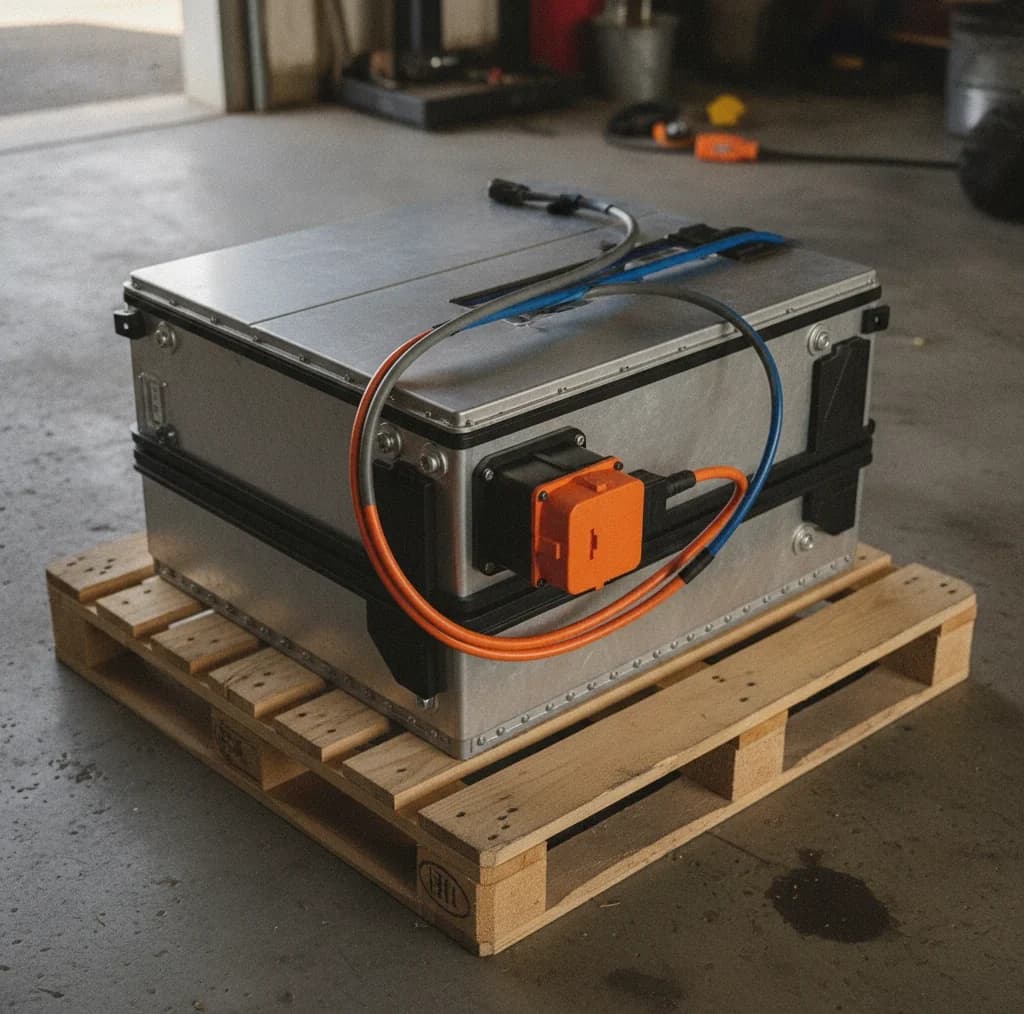
The service disconnect must be pulled and the system allowed to discharge before anything is opened. Insulated tools rated for the voltage are required, not a nice idea. The orange cabling is orange precisely so nobody touches it casually.
We sell parts, and we still tell people to have hybrid pack work done by someone trained for it. The saving from DIY here is not worth the risk profile, and many independent shops now specialise in exactly this.
Whether to fix it at all
On a hybrid worth $4,000 with a $3,000 dealer quote, the arithmetic is obvious and unpleasant. But run the alternatives before deciding the car is finished.
A $700 module repair on a car worth $4,000 is straightforward value. A $1,500 reman pack with a two-year warranty is usually worth it if the rest of the car is sound. A $500 salvage pack is a reasonable bet if you can fit it yourself and accept it may not last.
The other side of this: if you do decide to move the car on, a hybrid with a failed pack still has real value to a salvage buyer, and considerably more than a comparable non-hybrid. The pack has recyclable content and the catalytic converter on a hybrid is typically worth more than average.