
Key Takeaways
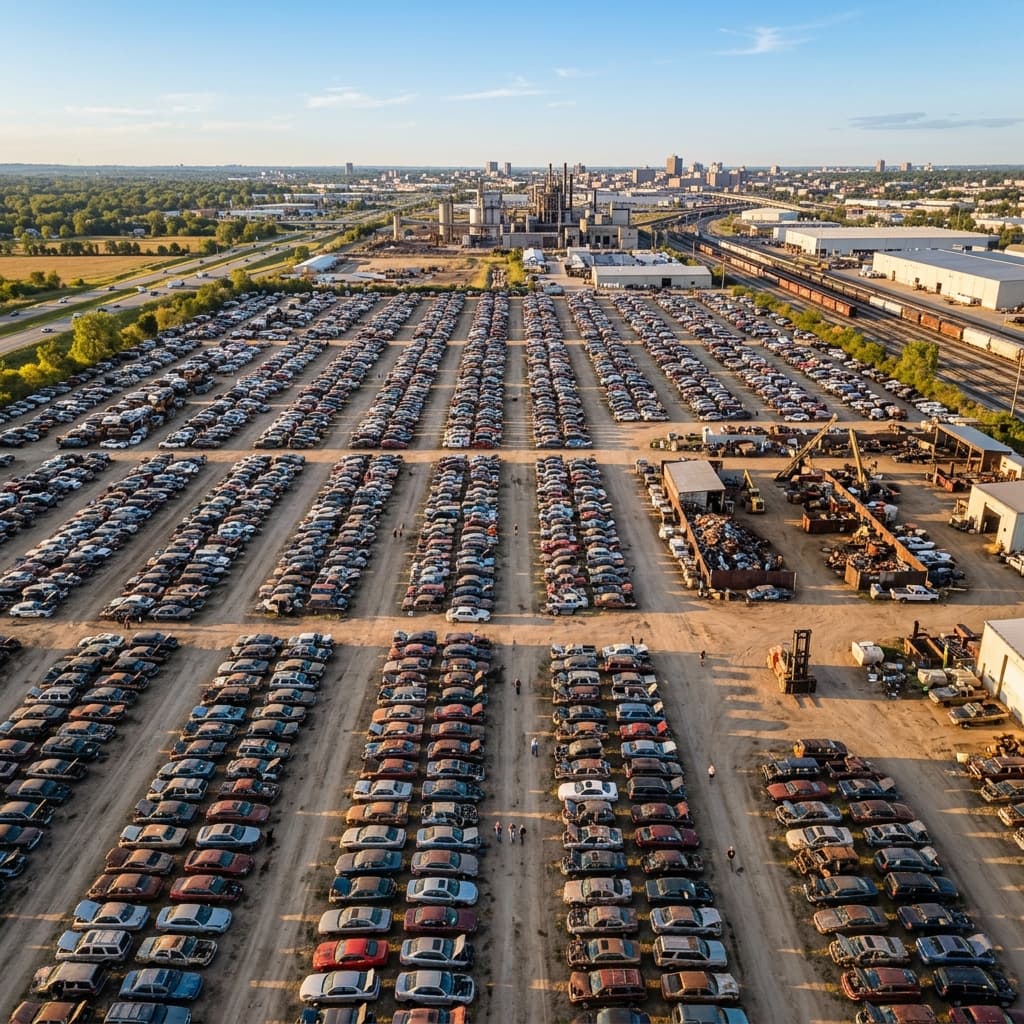
- Over 9,000 salvage yards operate across the U.S., with the largest chains (LKQ, Pull-A-Part, Pick-n-Pull) covering 40+ states
- Self-service yards charge 50-75% less than full-service yards, but you pull the parts yourself
- JunkyardInventory.com searches real-time inventory from 200+ yards so you can check stock before driving
- Used OEM parts from junkyards are factory-original — same quality as the parts that came on your car
How to Find Junkyards Near You (Without Wasting a Trip)
There are roughly 9,000 auto salvage yards in the United States, according to the Automotive Recyclers Association. The problem isn't finding one — it's finding one that has the exact part you need, right now, in stock.
That's where most people get stuck. You Google "junkyards near me," get a list of 15 yards within 30 miles, and then spend an afternoon calling each one asking if they have a passenger-side mirror for a 2017 Hyundai Elantra. Half the time, nobody picks up.
We built JunkyardInventory.com to fix that problem. Search by year, make, and model, and see what's actually sitting in yards right now — across 200+ locations from chains like LKQ Pick Your Part, Pull-A-Part, Pick-n-Pull, and more.
Self-Service vs. Full-Service Junkyards: Which One Do You Need?
Every salvage yard falls into one of two categories. Your choice depends on your skill level, your tools, and how much you want to spend.
| Feature | Self-Service Yard | Full-Service Yard |
|---|---|---|
| You pull the part? | Yes — bring your own tools | No — staff pulls it for you |
| Part pricing | $5-$200 for most parts | $50-$2,000+ depending on part |
| Warranty | Usually none (as-is) | 30-90 day warranty typical |
| Entry fee | $2-$4 per person | Free to browse |
| Part condition | You inspect it yourself | Pre-inspected and tested |
| Best for | DIY mechanics, common parts | Engines, transmissions, body panels |
| Savings vs. new OEM | 60-75% cheaper | 30-50% cheaper |
Self-service yards
These are the classic "you-pull-it" operations. You pay a small entry fee ($2-$4), walk out to the lot, find the vehicle you need parts from, and remove whatever you want with your own tools. Pricing is standardized — a door mirror costs the same whether it came from a Honda or a BMW.
The biggest self-service chains:
- LKQ Pick Your Part — 70+ locations across the U.S.
- Pick-n-Pull — 80+ locations, mostly West Coast and Midwest
- Pull-A-Part — 25+ locations, primarily Southeast
Full-service yards
You tell the counter staff what you need, they pull it from their inventory, test it if applicable, and sell it to you with a short warranty. Prices are higher because they're doing the labor and taking on warranty risk. These yards are better for expensive components where you want some guarantee — engines, transmissions, ECUs.
What Parts Are Worth Buying at a Junkyard
Not every part is a good junkyard buy. Some parts degrade with age or mileage and aren't worth the risk. Others are almost always fine used.
| Part Category | Junkyard Buy? | Typical Savings | Notes |
|---|---|---|---|
| Body panels (doors, fenders, hoods) | Yes | 60-80% | Check for rust, dents, color match |
| Interior trim, seats, dashboard parts | Yes | 70-90% | Low wear risk, easy to inspect |
| Headlights, taillights, mirrors | Yes | 50-70% | Check for moisture inside the housing |
| Engines | Yes (from full-service) | 50-65% | Ask for mileage, get a warranty if possible |
| Transmissions | Yes (from full-service) | 50-65% | Hardest part to inspect — warranty matters here |
| Brake rotors and drums | Maybe | 40-50% | Measure thickness; often too worn to reuse |
| Tires | No | — | Age-related cracking makes used tires risky |
| Airbags and seatbelts | No | — | Safety-critical; buy new only |
How to Search Junkyard Inventory Online
The days of driving yard to yard hoping to get lucky are over. Most major chains now publish their vehicle inventory online, and JunkyardInventory.com aggregates all of them in one search.
Here's how to use it:
- Go to JunkyardInventory.com
- Select your vehicle's year, make, and model
- Browse results showing which yards have matching vehicles in stock
- Check which specific yard locations are closest to you
- Call the yard to confirm the part you need is still on the car
One thing to know: the inventory shows which vehicles are at each yard, not individual parts. A 2016 Ford F-150 might be listed, but someone could have already pulled the alternator you need. Always call first on high-demand parts like starters, alternators, and catalytic converters.
Junkyard Pricing: What to Expect
Pricing varies by yard type and region. Here are typical ranges from self-service yards based on data from LKQ Pick Your Part and Pick-n-Pull price lists:
| Part | Self-Service Price | Full-Service Price | New OEM Price |
|---|---|---|---|
| Alternator | $25-$45 | $75-$150 | $250-$500 |
| Starter motor | $25-$40 | $60-$120 | $200-$400 |
| Side mirror (power) | $15-$25 | $50-$100 | $150-$350 |
| Door (complete) | $75-$150 | $200-$500 | $800-$2,000 |
| Engine (complete) | N/A (too heavy) | $500-$1,500 | $3,000-$7,000 |
| Transmission | N/A (too heavy) | $400-$1,200 | $2,500-$6,000 |
| Catalytic converter | $50-$100 | $150-$400 | $1,000-$3,000 |
| Headlight assembly | $20-$40 | $75-$200 | $200-$800 |
These prices are from 2026 data across multiple national chains. Your local yard may charge more or less depending on demand and region. Yards in the Rust Belt (Midwest and Northeast) tend to charge slightly more because rust damages inventory faster.
How to Find Junkyards by State
We track salvage yards across all 50 states. Here are the states with the most self-service locations:
| State | Major Chains Present | Approx. Yard Count |
|---|---|---|
| California | LKQ, Pick-n-Pull | 350+ |
| Texas | LKQ, Pull-A-Part, Wrench-A-Part | 300+ |
| Florida | LKQ, Pull-A-Part | 250+ |
| Ohio | LKQ, Pick-n-Pull | 200+ |
| Pennsylvania | LKQ, Pick-n-Pull | 180+ |
| Georgia | Pull-A-Part, LKQ | 150+ |
| Michigan | LKQ, Pick-n-Pull | 150+ |
Use our locations page to find specific yards in your state, with addresses, hours, and links to their inventory.
Tips for Your First Junkyard Visit
If you've never been to a self-service yard, here's what to expect:
Before you go:
- Search the yard's inventory online to confirm they have your vehicle
- Look up the part interchange number so you know which years and models share the same part
- Bring the right tools — most yards don't lend or sell tools on-site
What to bring:
- Socket set (metric and standard), wrenches, screwdrivers, pliers
- Closed-toe shoes or boots (broken glass is everywhere)
- Work gloves and old clothes you don't mind getting dirty
- Flashlight (cars are packed tight and it's dark under dashes)
- Your phone for photos and part-number lookups
At the yard:
- Check in at the front counter and pay the entry fee ($2-$4)
- Ask the staff which row your vehicle type is in — most yards organize by make
- Inspect the part before you remove it. Check for cracks, broken clips, and corrosion
- Take a photo of how the part is installed before you start removing it — it'll help during reinstallation
Why Used OEM Parts Beat Aftermarket
There's a reason experienced mechanics prefer junkyard OEM parts over brand-new aftermarket ones. OEM (Original Equipment Manufacturer) parts were designed specifically for your vehicle. They fit correctly, they're made from the right materials, and they meet the manufacturer's specs.
Aftermarket parts are made by third-party companies and they vary wildly in quality. Some are great. Some are terrible. You won't know which until it's installed. A $30 aftermarket window regulator that breaks in 6 months isn't a deal — it's a waste of your weekend.
A used OEM window regulator from a junkyard costs about the same ($20-$35 at a self-service yard), fits perfectly, and was built to last the life of the car. It already has 80,000 miles on it, sure, but those regulators are rated for 200,000+ cycles.
Search Junkyard Inventory Now
Stop calling around. Search our inventory to see what's in stock at 200+ salvage yards right now. Filter by year, make, and model. Find your part. Save money.
New to junkyards? Read our Self-Service Junkyard First Timer's Guide for everything you need to know before your first visit.