
Key Takeaways
- Penetrating oil the day before matters more in winter than any tool
- A battery impact wrench is the difference between a productive trip and a wasted one
- Yards are quiet in winter, so freshly set cars stay intact longer
- Plan around daylight. Rows get dark long before closing time
What actually changes in the cold
Everything takes longer, for reasons that compound. Steel contracts around threads. Rubber and plastic get brittle and snap instead of flexing. Grease stiffens. Your hands lose dexterity and you make mistakes. Daylight runs out at four.
None of that makes a winter trip a bad idea. It makes an unplanned one frustrating. The people who get good results in January treat it as a different job from the same trip in July.
Fasteners, which is the whole problem
Yards ban torches for good reason, so the usual answer to a seized bolt is unavailable. What is left is preparation and mechanical advantage.
- Penetrating oil the day before if you can get to the car twice, or at minimum spray everything as soon as you arrive and work elsewhere for twenty minutes.
- Six-point sockets only. Twelve-point sockets round rusty fasteners, and a rounded bolt in the cold is the end of that part.
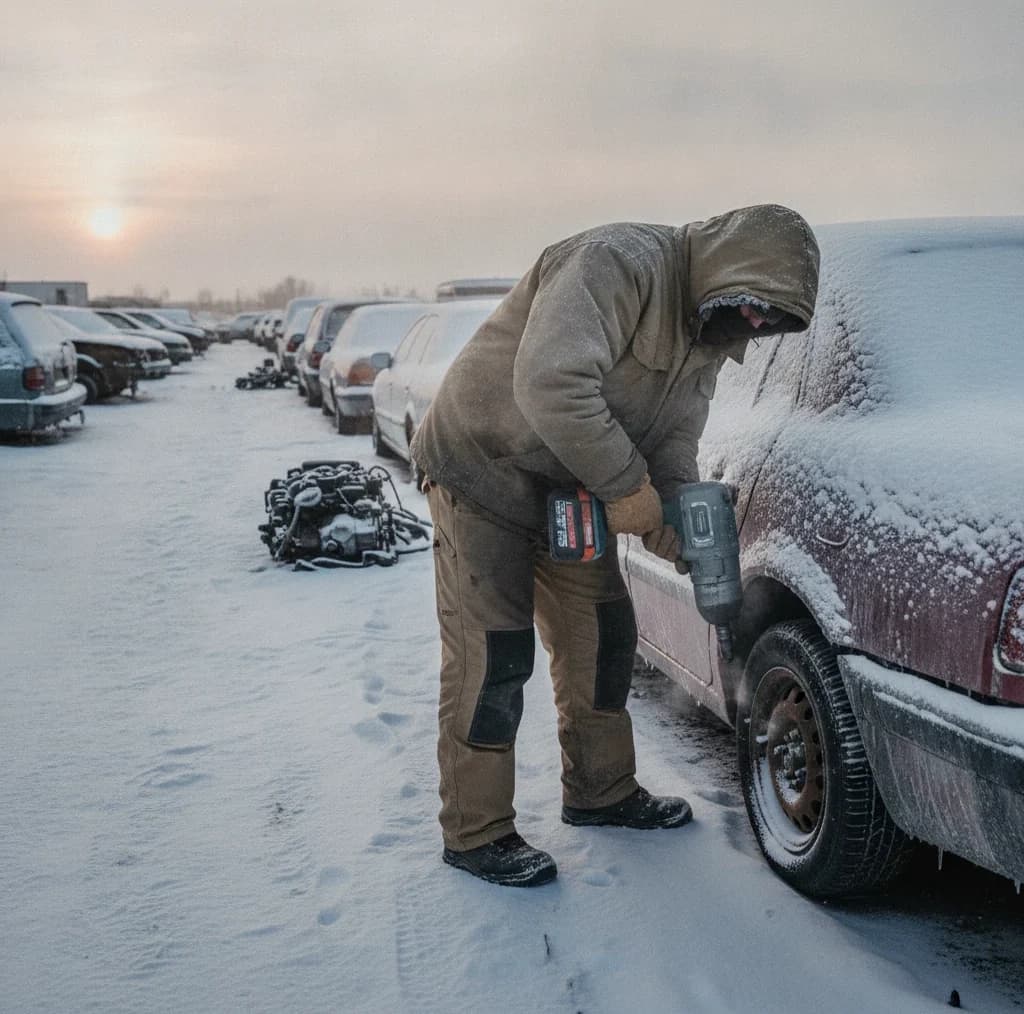
- Impact, not steady force. Repeated hammering breaks corrosion bonds that constant pressure will not. A battery impact wrench is worth more than any other tool on a winter trip.
- A long breaker bar for what the impact will not move.
- Accept the loss early. If a bolt is not moving and you are rounding it, move to another donor rather than spending an hour.
- Bring spare fasteners from elsewhere in the yard. Hardware is cheap and yours will snap.
Plastic is the other winter casualty. Clips, trim fasteners, and connector locking tabs that flex fine in summer shatter in cold. Warm a connector in your hands before pressing the tab, and expect to break some regardless.
Dressing for it properly
The mistake is dressing for standing outside rather than for lying on frozen gravel and then working up a sweat.
Layers you can remove, because you will be hot pulling a transmission and cold ten minutes later. Insulated waterproof boots with real grip; yard surfaces freeze into ruts and ice. Waterproof outer trousers, since you will kneel in slush. Two pairs of gloves, a thin pair for feeling fasteners and a warm pair to restore your hands between sections. A hat that fits under a headlamp.
Take a thermos. It sounds trivial and it materially extends how long you can work.
Timing the day
Arrive at opening. Winter daylight is the binding constraint, and rows are effectively dark well before yards close. A headlamp works for detail work and not for walking rows looking for a donor.
Check the weather rather than the calendar. A clear cold day is workable. A wet day just above freezing is miserable and dangerous underfoot. Yards in snow regions sometimes close after storms until rows are cleared, so call.
The compensation for all of this is that yards are empty in winter. A car set on a cold Tuesday may still have its alternator a week later, which never happens in June.
What to buy in winter
| Buy now | Why |
|---|---|
| AC parts | Nobody wants them in January. Same price, more supply |
| Body panels | Winter collisions fill yards with fresh donors |
| Heater cores and blower motors | In demand now, but supply is also high |
| Wheels for winter tires | A second set of steel wheels is cheap and saves mounting costs |
| Interior parts | Warmer to remove than anything under the car |
Conversely, leave anything requiring long periods under a vehicle for a better day if you can. Suspension and exhaust work in the cold on your back is where trips stop being worth it.
Winter-specific inspection
Two things to check that do not matter in summer.
Salt damage. Cars from regions that salt roads have corrosion that goes beyond surface rust. Check brackets, mounting ears and any threaded hole before committing. A part that looks fine can have a mounting tab that crumbles when torqued.
Freeze damage. A donor left with plain water in the cooling system may have a cracked block or a split heater core. If you are buying anything coolant-related, look for split hoses, a bulged radiator tank, or a cracked plastic reservoir as indicators the system froze.