
Key Takeaways
- Shop: $300-$700. New pump $80-$300, reman $60-$200, yard $25-$50
- Most whining is air in the fluid, not a failed pump. Check that first
- A failed pump sends debris into the rack. Flush before fitting a new one
- Electric power steering has no pump at all and none of this applies
Check the cheap causes first
We sell plenty of pumps to people whose pump was fine. The noise is genuinely convincing, and it usually is not the pump.
| Symptom | Most likely cause | Cost to fix |
|---|---|---|
| Whine that changes with steering input | Low fluid or air in the system | $10-$30 |
| Whine that is constant, foamy fluid | Suction-side leak drawing air | $20-$80 for a hose or clamp |
| Groan when cold, quiet when warm | Wrong fluid, or fluid past its life | $20-$60 flush |
| Heavy steering one direction only | Steering rack, not the pump | $500-$1,500 |
| Whine plus visible shaft leak | Pump seal, genuinely the pump | $300-$700 |
| Squeal that changes with engine rpm | Belt or tensioner | $30-$150 |
The fluid check is worth doing carefully. Pull the cap and look at the fluid on the dipstick or in the reservoir. It should be clear or light amber. Foamy means air, which means a leak on the suction side letting air in rather than fluid out. Dark and burnt means it has been overheating and the pump is probably next.
Many reservoirs have a fine mesh screen in the bottom that clogs with seal material over the years. It is invisible unless you look, and a blocked screen starves the pump and produces exactly the whine people replace pumps for.
Getting the fluid right
Power steering fluid is not one product. Some systems take ATF, some take a dedicated PSF, and several European makes require a specific mineral fluid, usually green, that is not compatible with anything else.
Putting the wrong fluid in a system with a mineral-fluid specification swells the seals and destroys the rack over a few months. It is one of the more expensive small mistakes available, and the fluids look similar enough that it happens regularly. Check the reservoir cap, which is normally marked.
If it is the pump
| Route | Part | Labor | Total |
|---|---|---|---|
| Dealer | $180-$450 | $150-$300 | $400-$800 |
| Independent shop, reman | $60-$200 | $130-$280 | $300-$700 |
| New pump, DIY | $80-$300 | Your labor | $100-$330 |
| Salvage yard, DIY | $25-$50 | Your labor | $45-$80 |
One detail that adds cost: on many pumps the pulley is pressed on and has to be transferred to the replacement with a puller and installer. The tool is around $40 to buy or free to borrow from a parts store, but you cannot do the job without it.
Buying one used
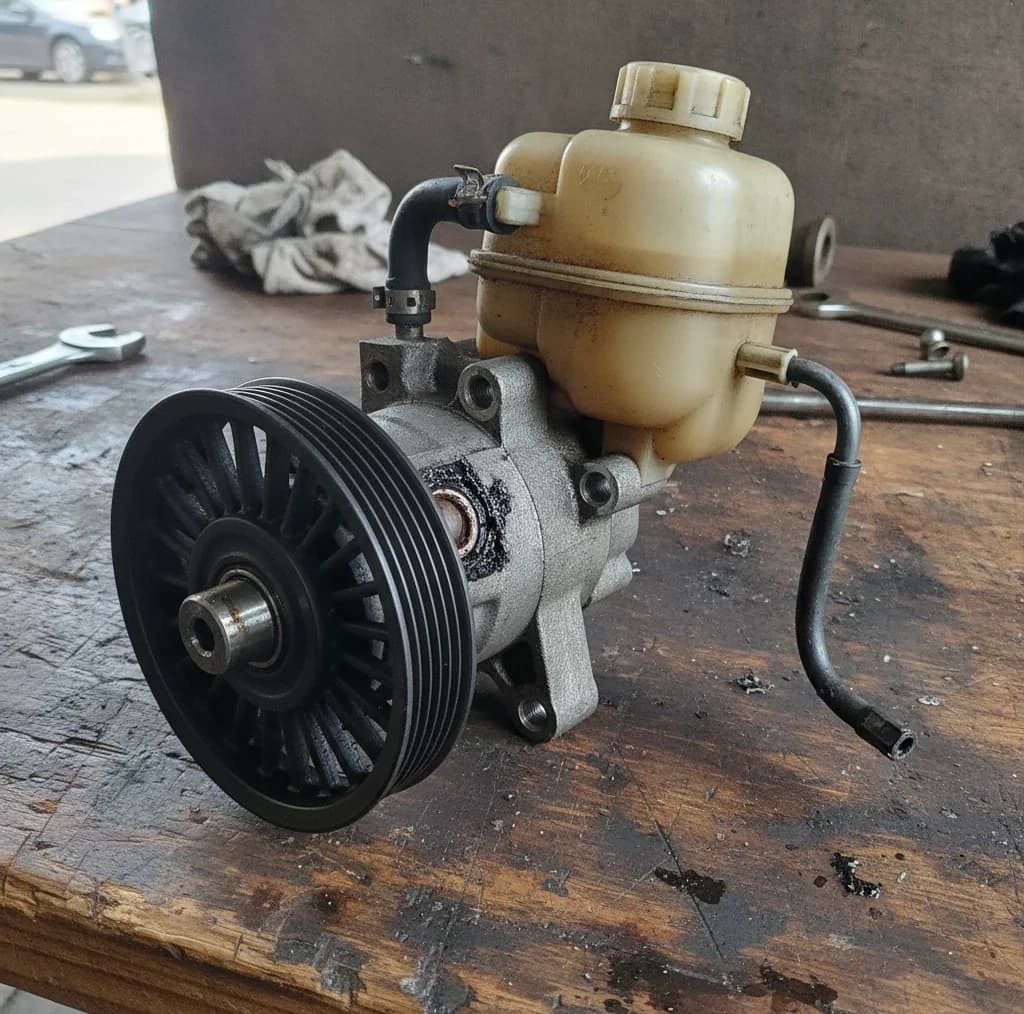
- Spin the pulley. Smooth, no grinding, no side play.
- Look at the shaft seal behind the pulley. Wet or crusty means it was leaking.
- Check the reservoir if it is integral. Dark burnt fluid means the pump ran hot.
- Match the pulley type and pressure port fitting. Metric and SAE flare fittings look similar and are not interchangeable.
- Take the high-pressure hose too if it looks sound. They are expensive new and always the thing that seeps afterwards.
- Check the reservoir cap for fluid type markings, which confirms what the donor system used.
Flush the system, or do it twice
When a pump fails internally it grinds up its vanes and sends aluminum through the lines into the rack. Fit a new pump into that system and the debris circulates straight back through it.
Flushing is straightforward. With the front wheels off the ground and the return line into a container, top up the reservoir and turn the steering lock to lock while the engine idles briefly, until what comes out runs clean. Expect to use two or three quarts.
Then bleed properly. With the engine off, turn lock to lock several times to work air out, top up, and repeat until the level stops dropping. Running a dry pump even for seconds is what kills replacements early.
The cars this does not apply to
Most vehicles from roughly 2012 onward use electric power steering, with a motor on the column or rack and no pump, belt, or fluid. If your car has no reservoir under the hood, that is what you have.
Electric systems fail differently: a torque sensor fault, a failed motor, or a software issue, usually accompanied by a steering warning light and a code. The fix is a rack or column assembly, typically $600-$2,000, and often needs calibration afterwards. A used unit is a reasonable buy there, though many require programming to the vehicle.